The Kala Ghoda Festival is one of Mumbai’s most iconic cultural celebrations, which has been rooted in the city’s colonial past and its vibrant artistic present. The nine-day festival celebrated art, heritage, and creativity. The festival features a diverse range of arts, including visual arts, music, dance, theatre, literature, and more.
️ The Kala Ghoda Arts Festival (@kgafest) returns with a new edition! The festival kicked off today and will continue till February 8, 2026.
The theme this year is ‘Ahead of the Curve’.
With over 500 events planned across 15+ art and culture genres, the nine-day festival… pic.twitter.com/llTsKVoSTr
— Free Press Journal (@fpjindia) January 31, 2026
This year, the 26th edition of the Kala Ghoda Arts Festival commenced on Saturday, January 31, and will run through Sunday, February 8, 2026. However, this year’s culture festival has a unique aspect, which is Panchamahabhuta, prominently displayed in the entrance area of the Kala Ghoda Festival. Be sure to check it out when you go to Kala Ghoda; it will definitely grab your interest. If this piques your interest, continue reading to discover Panchamahabhuta and how everything around us is ultimately linked to it.
What is the meaning of Panchamahabhuta?
Panchamahabhuta refers to the ancient concept of five elements, which form the entire universe, and ultimately the creation of the Earth and human beings. These fundamental elements are- Earth, Water, Fire, Air, and Space. The five blocks of the structure are made up of different shapes and features symbolising these five fundamental elements. The idea of Panchamahabhuta (five great elements) is acknowledged in Buddhism as well, yet it primarily emphasises four elements rather than five in many traditions. In Buddhism, these are known as the Mahābhūta.
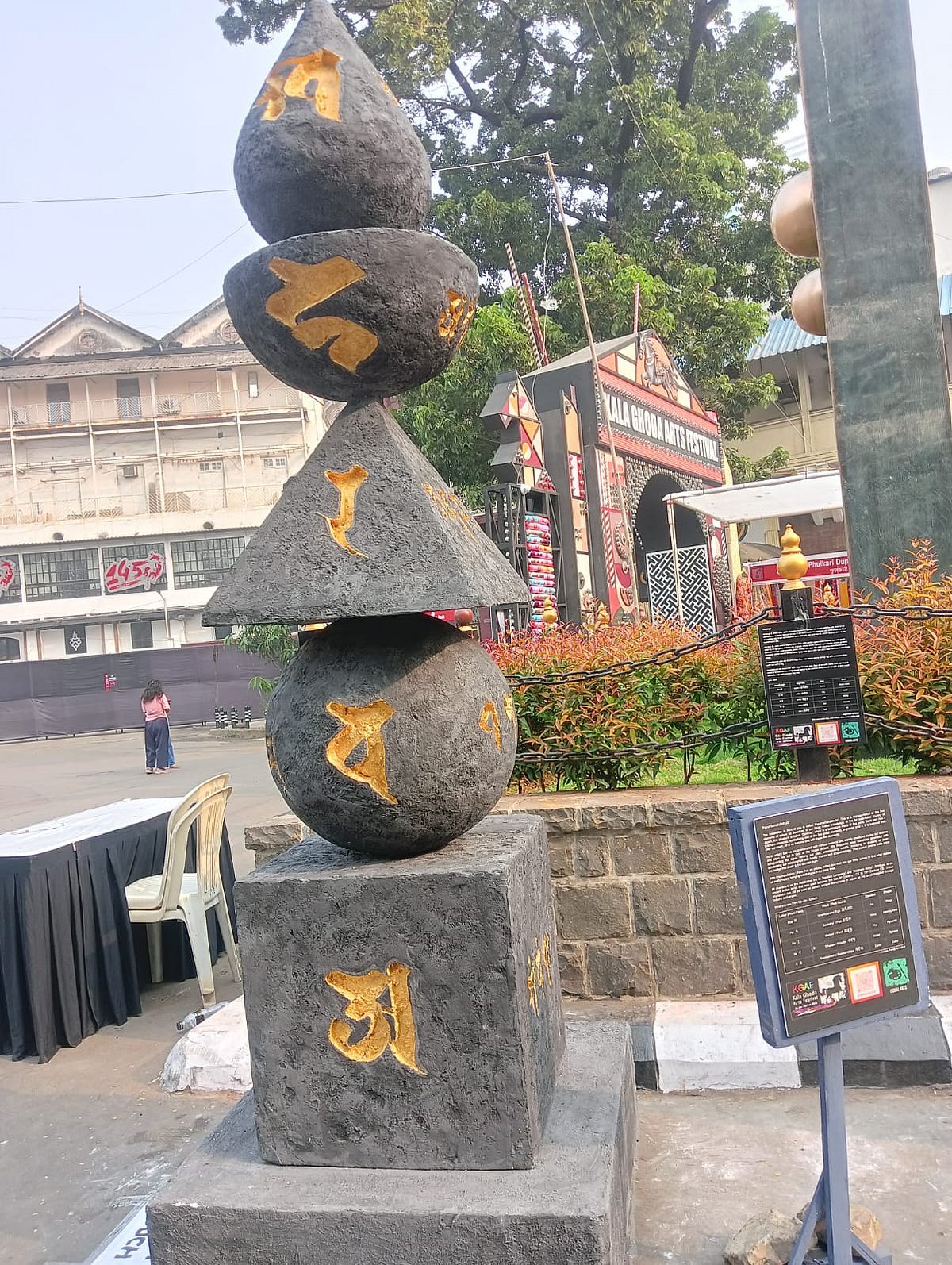
The five elements and their meaning
Earth (Prithivi): It symbolises solid form or structure.
Water (Jal): Water represents nourishment, fluidity, emotions, and intuition.
Fire (Agni): Fire is the source of energy and warmth. It symbolises clarity and governs metabolism.
Air (Vayu): It represents movements, lightness, and life.
Space (Ether): It signifies openness, subtlety, and the channels within the body.
Importance of Panchamahabhuta in life
Panchamahabhuta, also known as Panch Tatva, are the five elements that form all living and non-living matter on the blue planet. It is crucial for maintaining bodily structure, physiological functions, and overall health. Each element is responsible for the creation of a human being and is also responsible for the cycle of life and death. The space element provides space for organs and governs cellular communication.
Air (another element) controls all movements, like respiration and communication. Whereas Fire is responsible for metabolism, digestion, and temperature regulation in the body, Water nourishes the fluid requirements and maintains the moisture level in the body, and last but not least is Earth, which symbolises structure, shape, and bones.