
 0
0
 0
0
In a sea of self-proclaimed enlightenment peddlers cluttering your Instagram feed with perfectly filtered sunrises and hashtags like #AwakenYourSoul, it’s almost comical how we’ve elevated the likes of Sri Sri Ravishankar to “OG of meditation” status. Oh, please—spare me the eye-roll. This guy jets around the world hosting mega “Art of Living” workshops where participants pay premium prices to learn how to breathe (something they’ve been doing for free since birth), all while he flashes that trademark grin that screams “I’ve got inner peace, and you can too… for a fee.” And here’s the kicker: the only reason he’s perched on that pedestal as the current “OG” is because of Maharishi Mahesh Yogi, the true pioneer who mentored him early on, introducing him to Vedic wisdom and organized spirituality through lectures that sparked his path. But after a dramatic fallout—where Maharishi reportedly dismissed Sri Sri’s signature Sudarshan Kriya as “sweet poison” that wouldn’t lead to ultimate good—they parted ways, and Sri Sri went on to build his own empire. These days, he’s apparently too busy solving Modiji’s crises, like mediating the Ayodhya dispute or backchanneling in national conflicts, to publicly share much (or anything substantial) about Maharishi’s profound contributions to his spiritual journey. Sure, there are a few dusty acknowledgments, like a 2008 tribute calling Maharishi an “emperor and ascetic” after his passing, or rare stories of sitting with him in Switzerland, but they’re sparse and hardly trumpeted—nothing like the viral posts about his Modi meetups or global peace gigs. And don’t get me started on the other modern spiritual rockstars—Sadhguru with his motorcycle mysticism, or those TikTok yogis doling out bite-sized wisdom between sponsored ads for herbal teas. They’re all riding the wellness wave, repackaging ancient ideas into apps and TED Talks, as if they’ve invented serenity itself.
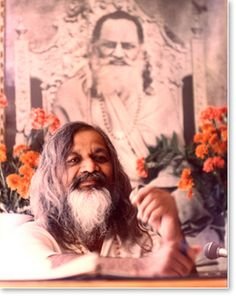
But amid this circus of commodified calm, there’s one figure who gets criminally underrated, like that brilliant album track buried at the end of a playlist: Maharishi Mahesh Yogi. This man wasn’t just ahead of his times—he was light-years beyond, blasting Vedic wisdom into the stratosphere long before “mindfulness” became a corporate buzzword. While today’s gurus build empires on social media virality, Maharishi quietly revolutionized global consciousness, turning meditation from an esoteric Himalayan hobby into a household practice that even rock gods like the Beatles couldn’t resist. Underrated? Absolutely. Overlooked in favor of flashier frauds? Tragically so. Let’s dive into his life journey, shall we? Because in a world obsessed with quick-fix gurus, Maharishi’s story is a sarcastic reminder that true depth doesn’t come with a like button.
Born Mahesh Prasad Varma on January 12, 1918 (or thereabouts—records from colonial India weren’t exactly precise), in a modest Kayastha family near Jabalpur, Madhya Pradesh, young Mahesh grew up far from the ashrams and incense clouds one might expect. No, he was a science nerd through and through, diving headfirst into physics at Allahabad University. Imagine that: a future spiritual giant geeking out over quantum mechanics and electromagnetism, graduating in 1942 with a degree that could have landed him a cushy job calculating trajectories or whatever physicists did back then. But fate, that cheeky trickster, had other plans. While his peers were probably plotting careers in post-independence India, Mahesh was about to have his rational world upended by a dose of divine chaos.
The Day a Young Physicist’s World Shattered into Bliss: Maharishi’s First Glimpse of Guru Dev
Imagine the roaring chaos of the Kumbh Mela in 1939–1940 at Prayagraj—the sacred confluence of rivers teeming with millions of pilgrims, naked Naga sadhus smeared in ash, the air thick with incense, chants, and the clang of bells. Amid this swirling ocean of humanity wandered a sharp-minded young man named Mahesh Prasad Varma, fresh-faced physics graduate-to-be from Allahabad University, accompanying a friend to the greatest spiritual gathering on Earth.
Suddenly, a voice rose above the din—a voice of profound authority and serenity. It belonged to Swami Brahmananda Saraswati, the revered Shankaracharya of Jyotir Math, known to his devotees as Guru Dev, the Divine Teacher. As he spoke from an elevated platform, something miraculous happened in young Mahesh’s heart. Some accounts whisper that Guru Dev’s face briefly glowed with an otherworldly light, piercing straight into the young man’s soul. In that instant, everything changed. The equations of physics faded; an irresistible pull toward pure consciousness took hold.
Trembling with awe, Mahesh turned to his friend: “I must meet him.” Guided through the throng, he was granted a private audience. Standing before the towering master—serene eyes radiating boundless compassion—Mahesh asked for nothing grand. No plea for power, no demand for secret mantras or instant enlightenment. His heart’s only cry was the simplest, most profound yearning: to remain close, to serve, to breathe the same air as this living embodiment of divinity. Later, he would confess his deepest wish was “just to breathe in his breath.”
Guru Dev, seeing the purity of this surrender, smiled and insisted: “First, complete your degree.” Mahesh obeyed, graduating in 1942 before formally becoming a disciple around 1940–1941. Renamed Bal Brahmachari Mahesh, he began humbly—sweeping floors, running errands—yet his devotion shone so brightly that he soon became Guru Dev’s personal secretary, closest confidant, and guardian of sacred correspondence.
For thirteen sacred years, until Guru Dev’s mahasamadhi in 1953, Mahesh lived in the radiant shadow of his master. He often said, “My real life began at the feet of Guru Dev.” It took two and a half years of constant proximity for their minds to merge in perfect oneness—a silent transmission deeper than words.
In quieter moments, Mahesh posed profound questions, like how to invoke an enlightened master after their physical departure. But the mission to carry Vedic wisdom to the modern world came as a final trust: Guru Dev charged him with bringing spiritual regeneration to householders everywhere.
Devastated by the loss, Mahesh retreated into silent seclusion in the Himalayas, vanishing into caves and remote ashrams for deep contemplation.
Then, in 1955, he emerged transformed—as Maharishi Mahesh Yogi—ready to share the effortless technique that would become Transcendental Meditation, touching the lives of millions, from Beatles to businessmen.
All because one young seeker, amid the thunderous holy frenzy of the Kumbh, dared only to ask: “Let me stay near you.” From that whisper of total surrender bloomed a global revolution of inner peace.
Ah, if only today’s gurus could match that level of humble beginnings—instead of launching with a viral video, Maharishi spent years in anonymity, honing his craft under a true master. Post-Himalayas, he didn’t waste time. By 1955, he was lecturing across India, refining what would become Transcendental Meditation (TM)—a simple, mantra-based technique that promised to transcend thought without the contortions of yoga poses or the starvation diets of asceticism. Sarcasm alert: While modern spiritualists hawk “advanced” breathing apps that track your inhales via smartwatch, Maharishi kept it effortless, insisting anyone could dive into bliss twice a day for 20 minutes. Revolutionary? You bet. Ahead of his times? By decades.
His global conquest kicked off in 1958 with a tour starting in Rangoon (now Yangon, Myanmar), spreading TM through Asia before hitting the West. By the 1960s, he was the spiritual It-boy, founding the Spiritual Regeneration Movement and attracting hordes of seekers disillusioned by the rat race. Enter the Beatles in 1968: John, Paul, George, and Ringo flocked to his ashram in Rishikesh, India, for a retreat that birthed songs like “Dear Prudence” and turned TM into a cultural phenomenon. Oh, the irony—while Sri Sri might rub elbows with world leaders today, Maharishi had the Fab Four meditating at his feet, sparking a meditation boom that predated the wellness industry by half a century. Celebrities from Mia Farrow to Clint Eastwood followed suit, but Maharishi wasn’t in it for the glamour; he was building something bigger.
In the 1970s, he founded Maharishi International University (now Maharishi University of Management) in Fairfield, Iowa—a bizarre Midwestern oasis where students learn Vedic science alongside business degrees. He delved into “Maharishi Vedic Science,” blending ancient texts with modern physics, predicting things like the unified field theory way before quantum hippies made it cool. By the 1980s and ’90s, TM centers sprouted worldwide, with research (yes, actual studies) showing benefits for stress, hypertension, and even crime reduction via group meditation—his “Maharishi Effect” claimed collective calm could lower societal violence. Skeptical? Sure, but it’s more substantive than today’s guru tweets about “vibrational alignment.”
Maharishi lived out his later years in Vlodrop, Netherlands, overseeing a vast organization until his passing on February 5, 2008, at age 90. His legacy? Over 5 million TM practitioners, countless books like Science of Being and Art of Living, and a quiet revolution that made meditation mainstream without the ego trips. Yet, here we are in 2025, where flash-in-the-pan spiritualists dominate the discourse, and Maharishi is relegated to history books or Beatles trivia. Underrated? Painfully so. In a world drowning in superficial sages, he’s the deep well we keep ignoring—because true pioneers don’t need influencers to validate their bliss.


