 0
0
 0
0
In the mountain paradise of Jammu and Kashmir, the threat of terror attacks is compounded by the challenge of treacherous terrain, a reality felt most acutely by the Indian Army operating in these highly demanding circumstances. While combat operations and counter-insurgency efforts often dominate the headlines, the military faces a persistent and equally devastating silent enemy in the form of road accidents.
These incidents, occurring on the jagged edges of the Himalayas and the Pir Panjal Range, frequently result in casualties that rival the numbers lost in active skirmishes. The reality for soldiers in this region is that the journey to a forward post can be as hazardous as the duty performed upon arrival, with the margins for error often measured in inches against thousand-foot drops.
Doda tragedy and the anatomy of high-altitude risks
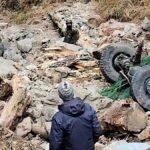
The gravity of this issue was starkly illustrated on January 22, 2026, when a devastating accident occurred in Jammu and Kashmir’s Doda district. A heavily armoured bulletproof vehicle, carrying 17 personnel along the Bhaderwah-Chamba interstate highway, skidded off the mountain track at Khanni Top and plunged 200 feet into a deep gorge.
In an unfortunate incident, an Army vehicle carrying troops for an operation, slipped off the road while navigating treacherous terrain in bad weather, in general area of Doda. There are multiple casualties, including fatal. The injured have been evacuated for…
— White Knight Corps (@Whiteknight_IA) January 22, 2026
This single event claimed the lives of 10 soldiers and left many others battling critical injuries. The tragedy serves as a grim reminder of the unique vulnerabilities faced by military convoys. Ironically, the heavily armoured vehicles designed to protect personnel from external threats can become a liability on such challenging roads. A high centre of gravity and immense weight make these units notoriously difficult to stabilise once they lose traction on the loose soil or black ice typical of the region.
Geography and the persistence of danger
The incident at Khanni Top is the latest in a long history of tragedies driven by treacherous topography. Back on August 16, 2022, a major accident near Chandanwari Pahalgam in Anantnag district saw a bus carrying paramilitary personnel skid into a river, claiming six lives. As the years progressed, the risks remained constant; on December 24, 2024, five soldiers were killed and five injured when their vehicle plunged 350 feet into a gorge in the Pir Panjal Valley of Poonch.
The opening of 2025 saw no respite, as inclement weather and poor visibility in Bandipora led to a vehicle skidding into a gorge on January 4, resulting in four fatalities. This was followed closely by an accident on January 27, 2025, where four jawans were injured at Gantar Morh in Poonch after their vehicle skidded into a ditch during a patrol return. Later that spring, on May 4, 2025, three more soldiers were lost when their truck veered off the Jammu-Srinagar National Highway near Ramban, falling 700 feet into a gorge.
Integrating AI to prevent such tragedies
In response to these mounting losses, the Indian Army has transitioned toward a data-driven safety protocol. A landmark development in late 2025 was the integration of an AI-powered accident prevention system. Patented by Colonel Kuldeep Yadav, this technology utilises specialised sensors to monitor biometric indicators of driver attentiveness.
This proactive approach aims to mitigate the human factor that contributes to a significant percentage of mishaps on long-haul logistics routes, providing a digital safety net where physical barriers are often absent.
Infrastructure modernisation to enhance road safety
Simultaneously, the Border Roads Organisation is working to re-engineer the region’s physical infrastructure. Under the umbrella of Project Sampark and Project Beacon, the BRO dedicated 22 vital infrastructure projects specifically to Jammu and Kashmir in December 2025.
These initiatives prioritise the elimination of notorious black spots and the widening of critical arteries to better accommodate modern armoured columns. By constructing all-weather tunnels and reinforced bridges, the military seeks to bypass the most dangerous high-altitude passes entirely.
Although the requirement to operate in unforgiving terrain remains a constant of mountain warfare, the combination of AI safety tools and robust infrastructure cannot be a more pressing need than now.


