




A special report by Investigative Journalist Maulikk Buch from Gujarat.
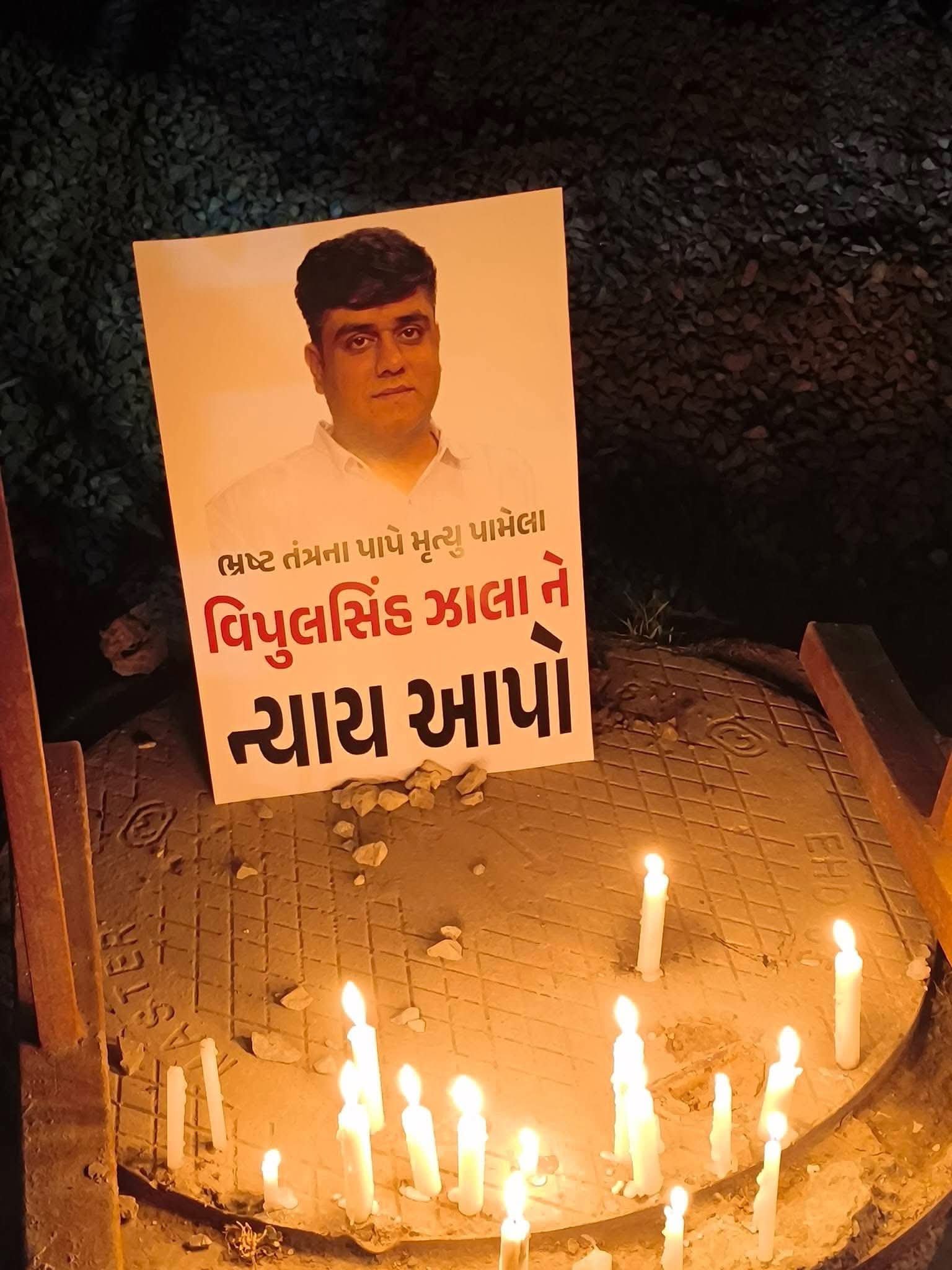
Open manhole accidents, often due to municipal negligence, theft of covers, or poor maintenance during rains or construction, remain a major safety hazard across India. These incidents frequently result in deaths, particularly affecting pedestrians, children, and motorists. Similar to the tragic case of Vipulsinh Zala in Vadodara (December 26, 2025), where a man fell into an uncovered drainage chamber left open after cleaning work, many cases involve falls into deep pits without warnings or barriers
Here are some recent and prominent cases resembling accidental falls into open manholes:
Gujarat’s Deadly Manholes: A Persistent Crisis of Negligence
In a state often touted as India’s model of development, Gujarat continues to grapple with a grim and preventable tragedy: deaths from open manholes and hazardous sewer cleaning. Despite laws banning manual scavenging and mandates for mechanized sanitation, 2025 has seen a string of fatal incidents that expose systemic failures in urban infrastructure, enforcement, and accountability. These are not isolated accidents—they reflect chronic negligence by municipal corporations, contractors, and oversight bodies.
Accidental Falls: Everyday Hazards Turned Lethal
Open or damaged manholes remain death traps on Gujarat’s streets, claiming lives through sheer civic apathy.
- December 2025, Vadodara (Manjalpur): Vipulsinh Zala, a 40-year-old man out for dinner with his family, slipped into a 15-30 foot deep open drainage chamber left uncovered after municipal cleaning work near the Manjalpur Sports Complex. Firefighters retrieved him quickly, but he was declared dead on arrival at hospital. The Vadodara Municipal Corporation (VMC) pledged to file an FIR against the contractor, highlighting yet another case of unchecked negligence.
- November 2025, Ahmedabad (Kubernagar): 50-year-old Nandlal Ambwani died from severe head injuries after his two-wheeler struck a broken manhole cover on November 26. Locals had repeatedly complained to the Ahmedabad Municipal Corporation (AMC) about the hazard. In response, the AMC suspended an assistant engineer and technical supervisor for supervision lapses and repair delays.
- February 2025, Surat (Variav): Two-year-old Kedar Vegad fell into an uncovered manhole while heading to buy ice cream with his mother. After a grueling 24-hour rescue involving fire services and NDRF, his body was recovered from a sewage pumping station sump, likely due to asphyxiation from toxic gases. The area featured old, uncovered manholes recently added to municipal limits. An FIR was filed, and notices issued to SMC officials.
Fatalities in Hazardous Cleaning: Violations of the Law
Deaths during sewer cleaning underscore the ongoing flouting of the 2013 Prohibition of Employment as Manual Scavengers Act, which bans manual entry into sewers without safety gear and mechanization.
- September 2025, Ahmedabad (Bopal): Migrant workers Vikas Kori (20) and Kanaiya Kori (21) from Uttar Pradesh suffocated while manually cleaning a sewer line in a residential society, without any protective equipment. Contractor Mukesh Thakur was arrested for negligence.
- January 2025, Surendranagar (Patdi): Sanitation workers Chirag Kanu Patadiya (18) and Jayesh Bharat Patadiya (28), both from Dalit communities, died of asphyxiation in a deep manhole (15-20 meters) lacking safety gear or ropes. The incident forced cancellation of a nearby event attended by Chief Minister Bhupendra Patel.
Though not detailed in recent reports, similar cases, like a March 2025 incident in Ahmedabad’s Vastrapur where worker Gautambhai Ghanshyambhai Patel suffocated after slipping into a drain, allege contractor negligence.
The Bigger Picture: Statistics and Systemic Failure
Nationally, over 470 sanitation workers died from hazardous sewer/septic tank cleaning between 2019 and October 2025, with Gujarat ranking prominently (49 deaths in key states during one period). Activists decry persistent violations of the 2013 Act, while the Gujarat High Court has criticized over-reliance on blaming contractors without holding officials accountable.
These tragedies stem from poor maintenance, ignored complaints, and continued manual cleaning despite mechanization requirements. Responses—suspensions, arrests, compensation—often feel reactive, failing to prevent recurrence. How many more lives must be lost before Gujarat’s “model” prioritizes safety over optics?
Sources: Reports from NDTV, Indian Express, Times of India, Hindustan Times, and government data via PIB (as of late 2025).


